
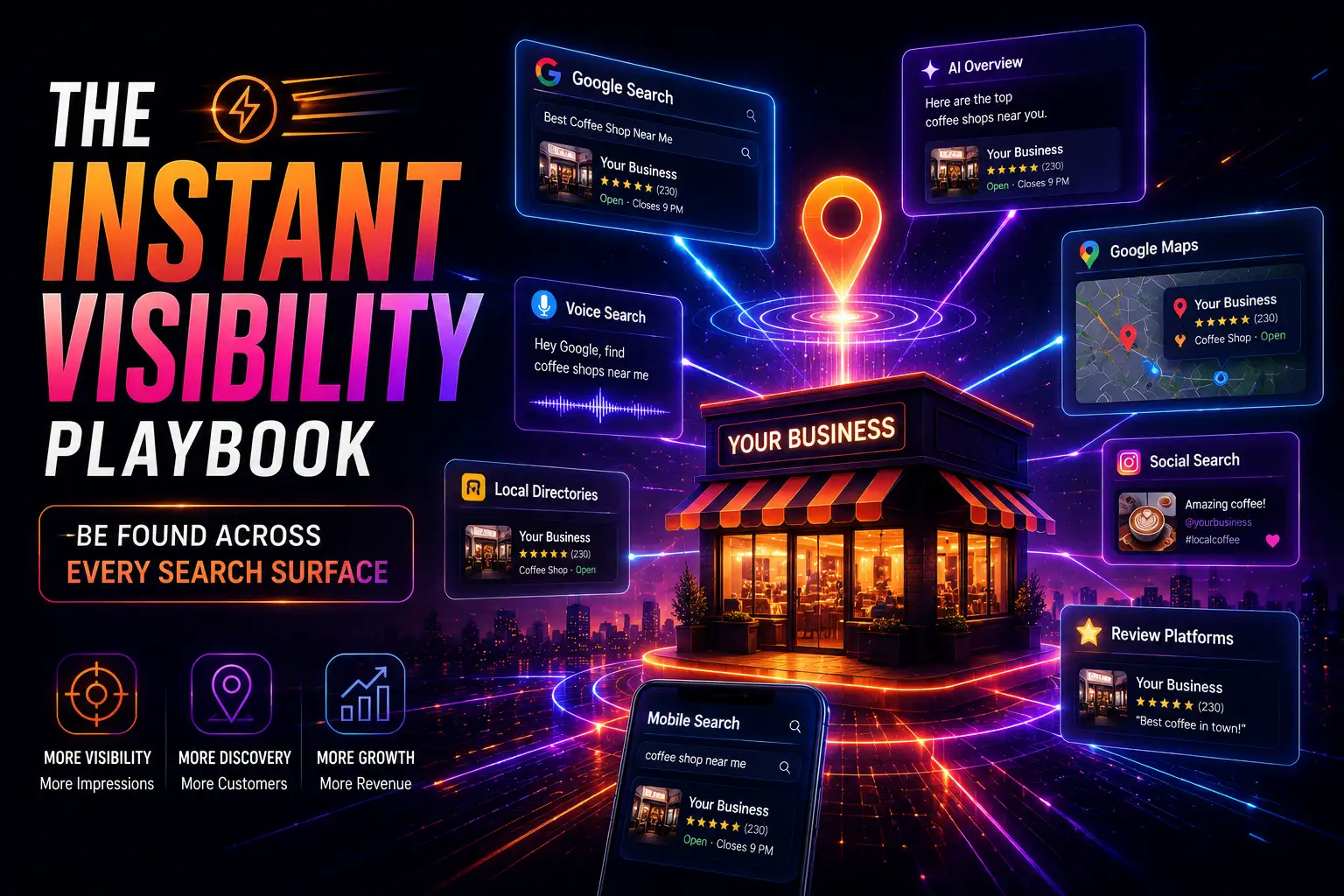
Modern local business discovery happens across multiple platforms simultaneously. This playbook covers every major search surface Google, Bing, Apple Maps, AI assistants, directories and what it takes to appear on all of them.
The days when a single Google ranking determined a local business’s digital visibility are over. Today’s consumers discover local businesses through a diverse ecosystem of search surfaces: Google Search and Maps, Bing Maps and local search, Apple Maps and Siri, Amazon Alexa and smart speakers, Yelp and category-specific review platforms, AI chatbots and assistants, and critically local business directories like Biz Lookup Now. Winning local visibility in 2026 means maintaining a strong, consistent presence across all of these surfaces simultaneously.
The good news is that the foundational requirements for multi-surface visibility share significant overlap. The consistent NAP data, authentic review portfolio, and structured business information that make you visible on Google also feed many of the other platforms. But each surface has specific optimization requirements that demand individual attention.
Google remains the dominant local search platform and deserves the most optimization investment. A fully optimized GBP profile complete, active, and review-rich is the core of your Google visibility strategy.
Bing processes a meaningful share of local searches and is the data source for Cortana and many voice assistant queries. Bing Places for Business is the GBP equivalent for Bing, and setting up a complete, verified profile there takes less than an hour but can deliver consistent additional visibility that most local businesses overlook.
Apple Maps and Siri are particularly important for mobile users on iOS devices. Register and optimize your business through Apple Business Connect (businessconnect.apple.com) with complete, accurate information and high-quality photos. Apple Maps represents a significant share of mobile navigation requests from iPhone users.
Voice assistants Alexa, Google Assistant, Siri pull from GBP, Yelp, and other trusted data sources to answer local business queries. Strong presence on these core platforms feeds voice assistant results. Optimizing your FAQ content for conversational queries specifically improves voice assistant recommendation rates.
AI assistants and chatbots pull from the same ecosystem of structured data, verified listings, and review platforms. Multi-platform citation consistency is the most direct path to AI assistant visibility.
Frequently Asked Questions
Q: Which non-Google local search platform is most important for US businesses?
A: Apple Maps is the most impactful non-Google platform for businesses in consumer-facing categories, given the high share of iOS devices in the US market. Yelp is critical for restaurants, home services, and professional services. Bing Places is a low-effort, moderate-impact addition worth maintaining.
Q: How do I find out which platforms are currently showing my business information?
A: Run a citation audit using BrightLocal or Moz Local these tools scan hundreds of platforms and show you exactly where your business appears and whether the information is accurate. This audit reveals both coverage gaps and inconsistencies across your multi-platform presence.
Q: Should I prioritize quantity or quality when expanding my multi-platform presence?
A: Quality and completeness on fewer, more authoritative platforms is more valuable than thin, minimal listings across dozens of low-quality directories. Build out a strong, complete presence on 15 to 20 high-authority platforms before expanding further.